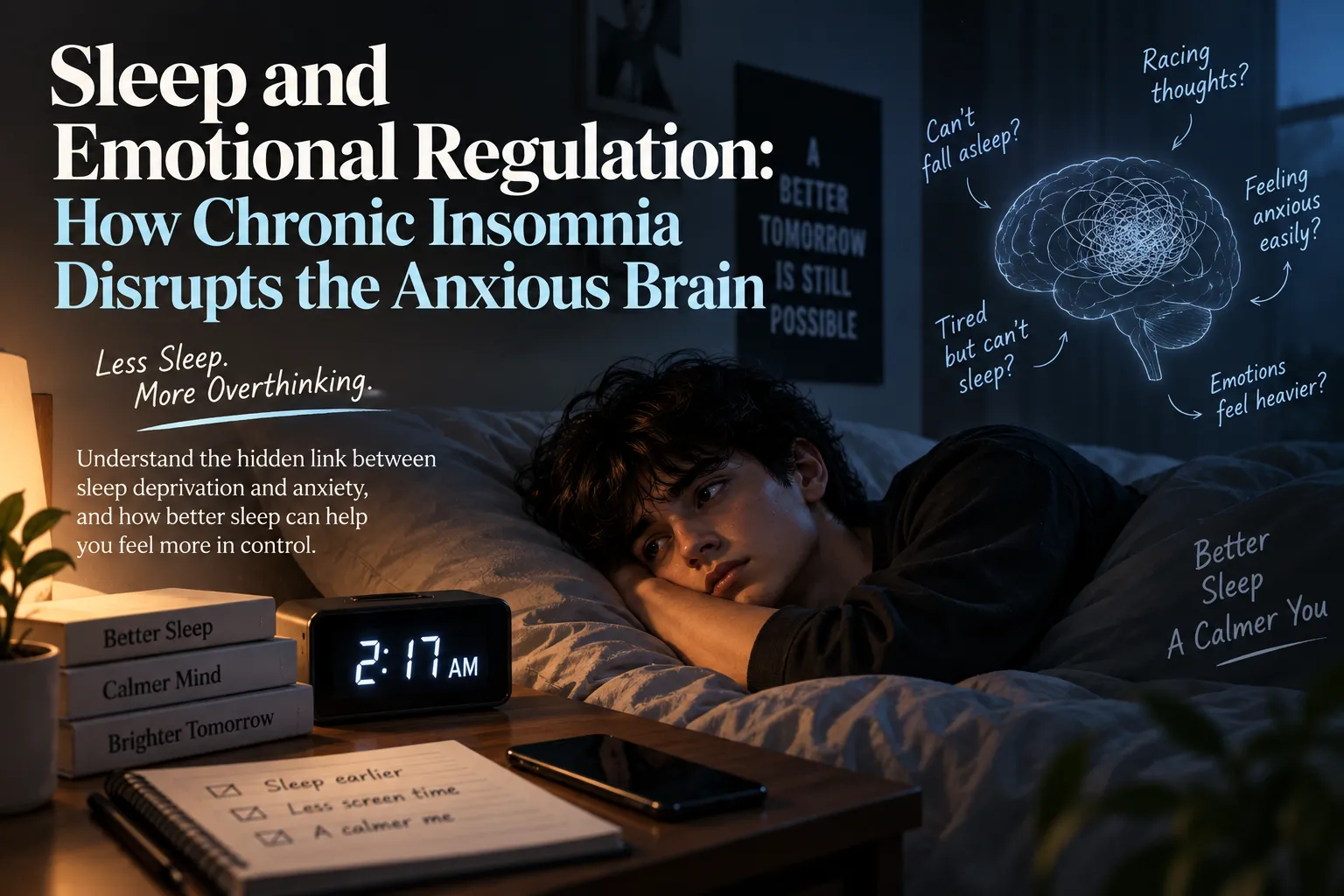
Sleep and Emotional Regulation: How Chronic Insomnia Disrupts the Anxious Brain
The bidirectional link between REM sleep deprivation, prefrontal cortex fatigue, and escalating emotional reactivity.
Dr. Bhoomi Raval
Consultant Psychiatrist (Gold Medalist) • MANAM Mental Health Initiative
- 1Sleep is not passive rest; it is the brain's neurochemical wash cycle and memory consolidation system.
- 2A single night of sleep deprivation increases amygdala reactivity by over 60%, making normal problems feel catastrophic.
- 3Fixing circadian rhythm is often the quickest catalyst for psychiatric stabilization.
The Bedtime Racing Mind Phenomenon
You feel exhausted all day, yet the moment your head touches the pillow, your brain launches into hyperdrive: reviewing conversations from five years ago, anticipating future catastrophes, and calculating the exact hours left until sunrise.
This is not a lack of willpower; it is a hyperaroused nervous system that has lost the ability to down-regulate into parasympathetic safety.
The Amygdala-Prefrontal Disconnect
Brain imaging reveals that without adequate deep and REM sleep, the rational prefrontal cortex loses inhibitory control over the emotional fear center (the amygdala).
Small everyday difficulties suddenly trigger heart palpitations, panic attacks, and uncontrollable emotional reactivity.
Evidence-Based Sleep Hygiene Rules
1. Keep wake times consistent 7 days a week.
2. Keep blue-light screens out of the bed at least 45 minutes before sleep.
3. Avoid treating the bed as an office or dining table—train your brain that bed equals rest.
“If insomnia has persisted for more than three weeks, an evaluation for underlying anxiety, depression, or circadian rhythm disorder can provide swift, lasting relief.”
Have questions about your mental wellness?
Connect directly with Dr. Bhoomi Raval at Kotak Hospital in Rajkot or book a confidential online video consultation.